Feature-by-feature, side-by-side
Scheduling & Posting
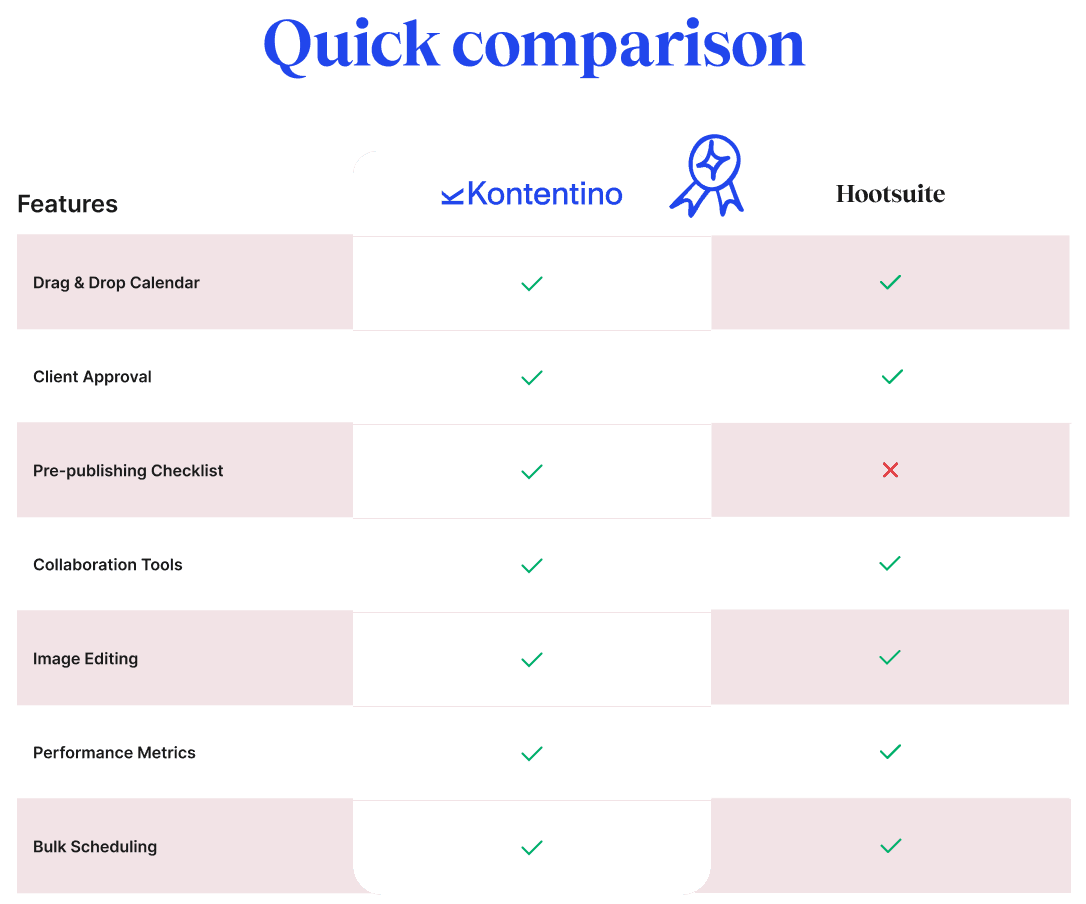
Kontentino: Purpose-built for planning and publishing across multiple channels from one workflow. Supports cross-profile content duplication/copying with platform-specific previews, so teams can schedule at scale without losing quality control.
Hootsuite: Strong multi-network scheduling with high-volume publishing support, including bulk publishing workflows (CSV-based) that suit teams pushing a lot of content across many accounts.
Advantage: Kontentino for approval-first publishing workflows and visual quality control.
Calendar & Visual Planning
Kontentino: A planning-centric experience: drag-and-drop calendar, clear multi-profile visibility, and workflow views that make it easy to spot any gaps, overlaps, and missing assets before content goes live.
Hootsuite: Offers planning via its “Plan” area and provides practical scheduling visibility, but for many teams the experience feels more “suite-like” (calendar is one part of a broader platform) rather than a dedicated content-ops calendar.
Advantage: Kontentino for agency and multi-brand planning where the calendar is the operational hub.
Collaboration & Approvals
Kontentino: Designed for internal and client approvals, comments, tasks, and structured review-including external sharing/review workflows that mirror real agency-client collaboration.
Hootsuite: Supports approvals and governance workflows, especially for teams needing formal permissions and internal controls (often plan-dependent). Collaboration is strong, but commonly more “enterprise governance” than “client approval simplicity.”
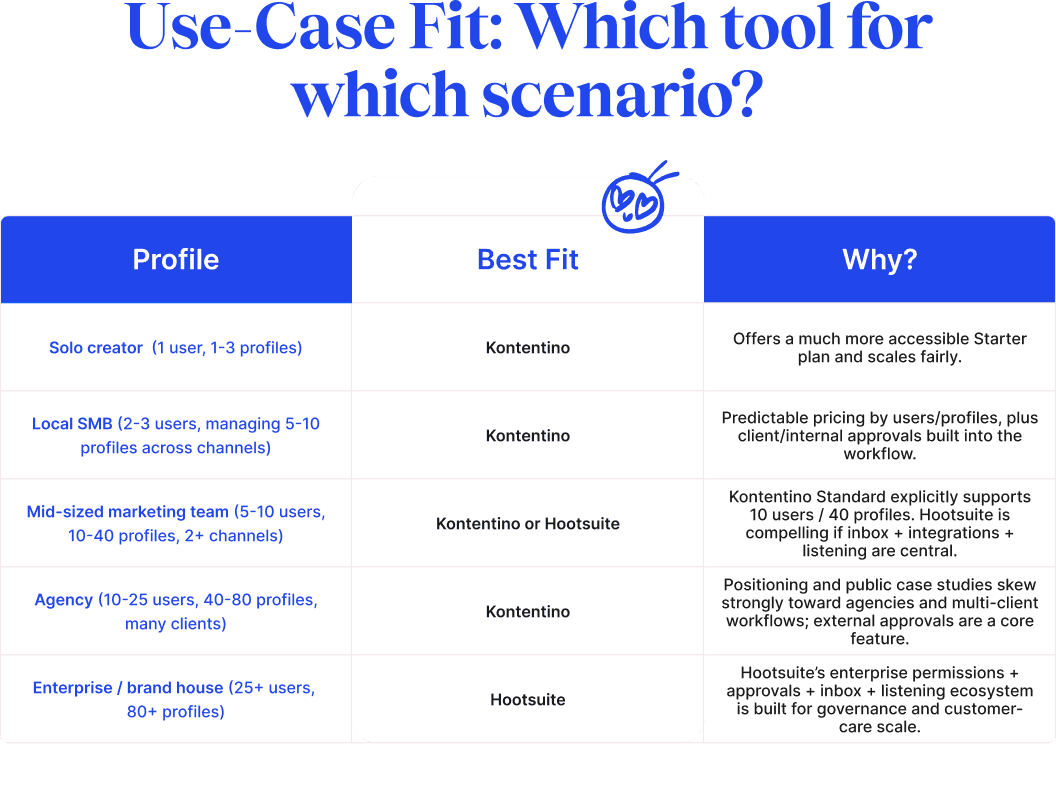
Advantage: Kontentino for client-heavy approval chains and fast, structured sign-off. Hootsuite for enterprise governance with complex permissioning needs.
Analytics & Reporting
Kontentino: Reporting is built for client-facing clarity and presentation-ready workflows designed to support agencies and teams who need to show results across multiple channels.
Hootsuite: Offers a mature analytics layer and broader suite reporting-especially valuable when you also rely on inbox operations, listening, and multi-team governance within one platform.
Advantage: Kontentino for client-ready, workflow-aligned reporting across channels. Hootsuite when you want analytics as part of a broader “social operations suite.”
Integrations & Automation
Kontentino: Optimized around content production efficiency-workflow automation, content library, and embedded AI assistance (copy, translation, hashtags) that reduces handoffs inside the planning process.
Hootsuite: Strong integration ecosystem and operational automations (inbox, routing, workflows) that can connect social to CRM/helpdesk and enterprise stacks-often a deciding factor for larger organizations.
Advantage: Hootsuite for breadth of integrations and “social ops” automation. Kontentino for workflow-integrated creation and approval speed.
Ad Management
Kontentino: Primarily built for organic content planning, approvals, and publishing. For paid campaigns, most teams execute directly in native ad platforms – using Kontentino to keep paid and organic calendars aligned.
Hootsuite: Provides lighter paid amplification workflows (e.g., boosting) and can fit teams that want basic paid support within the same suite used for scheduling and engagement.
Advantage: Hootsuite for lightweight paid amplification from within the platform. Kontentino as the better “front-end” planning and approval layer that keeps campaigns coordinated across stakeholders.
Pricing Transparency
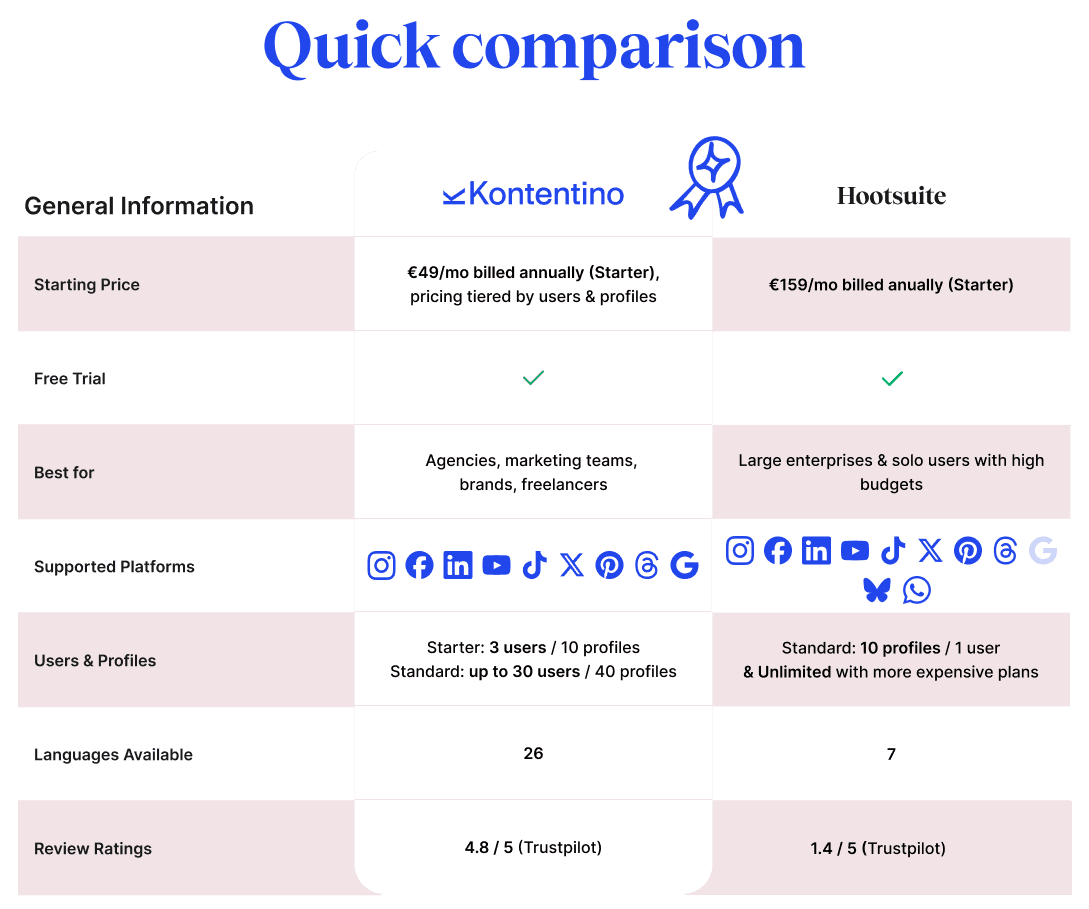
Kontentino: Clear tiering by users/profiles and visible add-ons make budget planning predictable – especially for agencies estimating costs across multiple clients and profile sets.
Hootsuite: Pricing is more seat-driven and plan-structured, predictable for enterprises standardizing on a suite, but often less favorable for smaller teams scaling up collaborators.
Advantage: Kontentino for straightforward budgeting and scaling by profiles and team needs. Hootsuite for organizations buying into a broader suite model.