Back to blog

So, you’ve heard the buzz about Meta Verified, right? That shiny blue badge on Instagram and Facebook profiles? It’s like the social media equivalent of wearing a tuxedo to a business meeting – it screams credibility, but without the stuffiness. If you’re managing a business and thinking, “Is this Meta Verified thing worth it?” – spoiler alert: it absolutely is. Let’s dive into why that blue check might just be your new best friend.
Meta Verified: your business’s secret weapon.
First things first: why should you care about Meta Verified? Simple. In the wild, wild west of social media, where everyone and their dog has a profile, standing out is tougher than finding a needle in a haystack – especially when that needle is trying to sell you something.
Being Meta Verified isn’t just about showing off (though, let’s be real, it does make you look pretty slick). It’s about giving your business a badge of trust.
Imagine this: a potential customer stumbles upon FB or IG profile. They see that coveted blue checkmark. Instantly, they know that profile is the real deal. It’s like a trust badge that says, “You can rely on us.” And in a world where trust is everything, that’s a big deal.
What’s in it for the brand? AKA: The perks of Meta Verified
Now, let’s talk about the juicy details. Why should you bother with Meta Verified? Here’s what you’re getting:
- Credibility matters! Meta Verified is like a digital trust fall – except your audience is ready to catch you. It confirms that your brand is legitimate, which helps build trust with your followers. And we all know trust leads to loyalty, which eventually leads to sales.
- And what bout increased visibility? Verified accounts tend to get more love from algorithms, meaning your posts are more likely to show up in feeds. More visibility equals more engagement, and who doesn’t want that?
- Oh, and let’s not forget about enhanced security. In the age of digital everything, the last thing you want is someone pretending to be you or your client (what a pain in the … with Meta help center, no?). That small blue mark helps protect brand profiles on social media from impostors, so you can focus on what really matters – real business.
- Is a myth about better engagement real? People are naturally drawn to Verified accounts. It’s like the blue checkmark gives them a green light to interact with the profile, and that can translate into more meaningful customer relationships.

The questions everyone’s thinking, but might be too afraid to ask (don’t worry, we’ve got you)
Alright, time to address the elephants in the room. What exactly is Meta Verified, and how does it work?
Meta Verified is basically a VIP pass in the world of social media. You apply, Meta checks to make sure you’re not a robot or an impersonator, and then – if you pass the test – you get that coveted blue badge. It’s like a bouncer letting you into the coolest club in town, except this club is where credibility and engagement are the drinks of choice.
Can small businesses apply, or is this just for the big dogs?
Good news, not at all. Don’t be fooled by the glitz and glamor. Meta Verified is for everyone, from small startups to established brands. In fact, it might even be more valuable for smaller ones because it helps stand out in a crowded market.
Is this going to be a pain to get?
Nope, not really. The process is pretty straightforward: you apply, prove your identity, and wait. It’s like ordering pizza – it might take a little while, but the end result is totally worth it. simple. You apply, prove you’re legit, and wait for approval. It’s like ordering takeout – easy and worth it.
Does Meta Verified affect SEO?
Ah, the million-dollar question. While the jury’s still out on how directly it affects SEO, there’s no denying that increased visibility and credibility can give your search rankings a nice little nudge. Plus, more engagement usually leads to better SEO results. So, while Meta Verified isn’t a magic wand, it’s definitely a powerful tool in digital toolbox.
Can you just buy a blue checkmark?
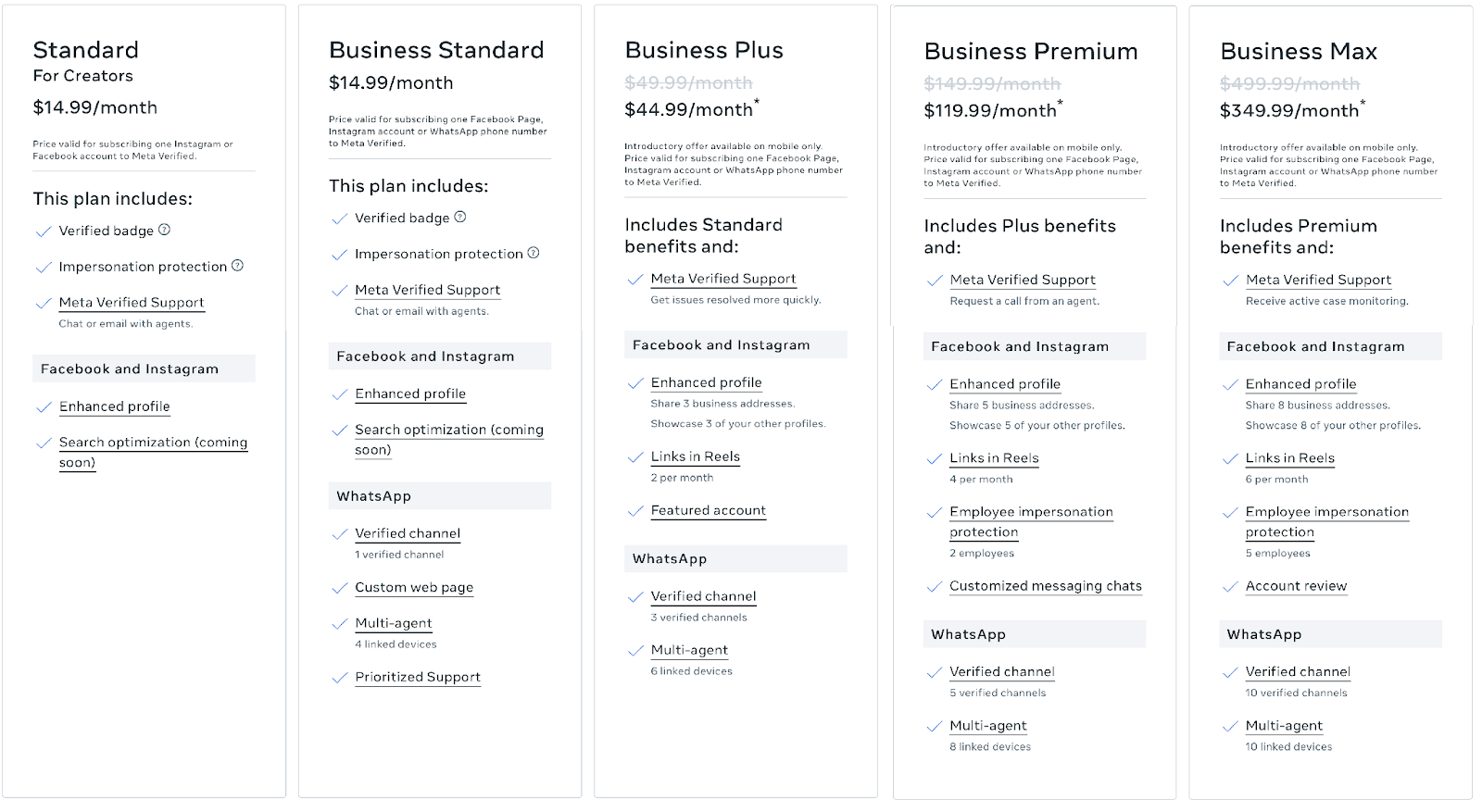
Sort of. Meta offers a subscription service for verification, but you can’t just throw money at it and hope for the best. You still need to meet their criteria, so think of it as buying a ticket to a Taylor Swift’s show – you still need to be on the list to get in.
Exploring Meta Verified for business: why it’s a game-changer?
Meta recently launched a more comprehensive and business-focused version of its verification process, called Meta Verified for Business. This initiative takes the concept of social media verification to a whole new level, offering businesses not just the blue checkmark but a suite of tools designed to boost credibility, enhance security, and improve online brand presence.
Meta Verified for Business is tailored specifically for brands and companies looking to solidify their authenticity on Facebook and Instagram. It goes beyond the standard individual verification by offering additional features that cater to the unique needs of businesses, especially in a digital landscape where trust is paramount.
What’s the difference between Meta and Twitter (or X, or whatever we’re calling it these days) verification?
Let’s dig into the great social media verification debate: Meta Verified vs. Twitter’s (or X’s, as it’s now known) verification. It’s not just about who gets the cool badge – it’s about what that badge actually means for the brand.
Both platforms offer verification, but the credibility behind them varies. Meta Verified is generally seen as more legitimate, especially since Twitter’s version (thanks, Elon) has become more about who’s willing to pay for it rather than who deserves it.
Twitter/X verification: a different ball game
Now, let’s talk about Twitter’s verification process. Before Elon Musk took the reins, Twitter social media verification was a prestigious mark reserved for public figures, celebrities, and brands – essentially those at risk of being impersonated. But since the introduction of Twitter Blue (the subscription service), the verification process has changed quite a bit.
The new Twitter Verification landscape
Unlike Meta, Twitter’s verification under the Twitter Blue subscription is available to anyone willing to pay for it. This has democratized the process but also diluted the prestige that once came with the blue checkmark.
Because now verification is now pay-based, it doesn’t necessarily signify that an account is authentic or credible. The badge simply means that the user has opted into a paid service.
Also, Twitter Blue offers additional features like editing tweets and longer video uploads, so the checkmark is kinda part of a broader package. However, these features don’t really contribute to the trustworthiness of the account.
So, which one is better?
If you’re a business looking to establish credibility and trust with your audience, Meta Verified is the stronger choice. It’s still rooted in verification based on authenticity, not just who’s willing to pay. Meta’s social media verification process ensures that only genuine entities get the badge, which can be crucial for maintaining your brand’s reputation.
Twitter’s approach is more flexible but comes with a trade-off – so it’s less about who you are and more about whether you’re willing to subscribe. For businesses that rely heavily on social proof and brand reputation, Meta’s verification holds more weight.
In a nutshell, if you want a verification badge that genuinely boosts your brand’s credibility, Meta Verified is the way to go. Twitter/X’s verification might offer some cool features, but it doesn’t carry the same level of trust.
Give Meta Verified a try!
Why wait? See what Meta Verified can do for your brand. Try it out on the official Meta page with your account and take that blue checkmark for a spin! It’s easy, and the benefits are real, some of our clients already see the difference in their brand visibility and customer trust, thanks to our analytics reports that highlight the boost in engagement they’ve gained since getting verified.