Since August 2, the EU AI Act’s transparency rules (Article 50) apply to anyone using AI in professional content. Right now, social teams are splitting into two camps: the ones slapping “AI generated” on every single post out of fear, and the ones pretending the whole thing doesn’t exist.

Both camps are wrong. The actual duty is narrow, specific, and completely manageable – once you know where the line is. There are exactly two situations where a label is required, and the maximum penalty for getting it wrong is 15 million euros or 3% of global turnover – so it’s worth 20 minutes of your attention.
Here’s which posts genuinely need a label, which don’t, and the audit that puts you ahead of roughly everyone.
If You Publish With AI, the Label Duty Is Yours – Not Your Tools’
The Act calls anyone using AI professionally a “deployer” – that’s every agency, brand, and marketing team. But the visible-label duty only bites in two situations: deepfakes (photorealistic content that could pass as real), and AI-written text that informs the public on matters of public interest.
Careful with that second one: health, consumer safety, and sustainability count as public interest even in commercial content. Everything else? Unlabelled by default.
Most of Your Feed Needs NO Label. Some of It Definitely Does.
Safe without a label:
- Illustrations, animations, obvious fantasy
- A real product shot on an AI background
- Color and lighting edits
- AI-drafted copy a human genuinely rewrote and took responsibility for
Needs a label:
- Photorealistic people who don’t exist (yes, even fully invented “synthetic influencers”)
- A voice imitating a real person
- Photoreal scenes that could pass as a record of something that happened
The test: all three of “looks real + could plausibly exist + could mislead about authenticity.”
The Platforms Are Already Building the Rails
Rule of thumb: the label goes IN the visual – captions don’t survive a reshare or a screenshot.
Meta just added an AI info label to the Instagram and Facebook API, and the EU published a free set of official AI-labelling icons (SVG and PNG, no attribution needed). Translation: disclosure is becoming a standard field in the publishing flow, not a footnote. Teams with a clear labelling rule will move faster than teams that debate every post.
Try This: The 20-Minute AI Label Audit
- Sort your next 2 weeks of scheduled posts into 3 piles: no AI involved, AI-assisted (a human rewrote it and owns it), and AI-generated photorealistic content.
- For pile 3 only, run the deepfake test: looks real + could plausibly exist + could mislead about authenticity. All three true? Label it – inside the asset, visible at first glance, no click or hover required.
- Write one internal rule your whole team can repeat from memory: “If it could pass as a record of reality, it gets a label. If we’re not sure, we don’t publish – we escalate.”

Worth knowing: the EU’s own user testing found the official icons work best when paired with a short text label like “AI generated” – the icon alone confused people.
Where to Get the Official Bits
- Official EU AI icons – free SVG/PNG, black and white variants, no attribution needed.
- Meta’s AI info label – just added to the Instagram and Facebook API changelog.
- Your platforms’ in-app AI disclosure toggles – Instagram, Facebook, and TikTok all have one now. Know where they live.
Compliance Isn’t a Policy Doc. It’s a Step in Your Approval Flow.
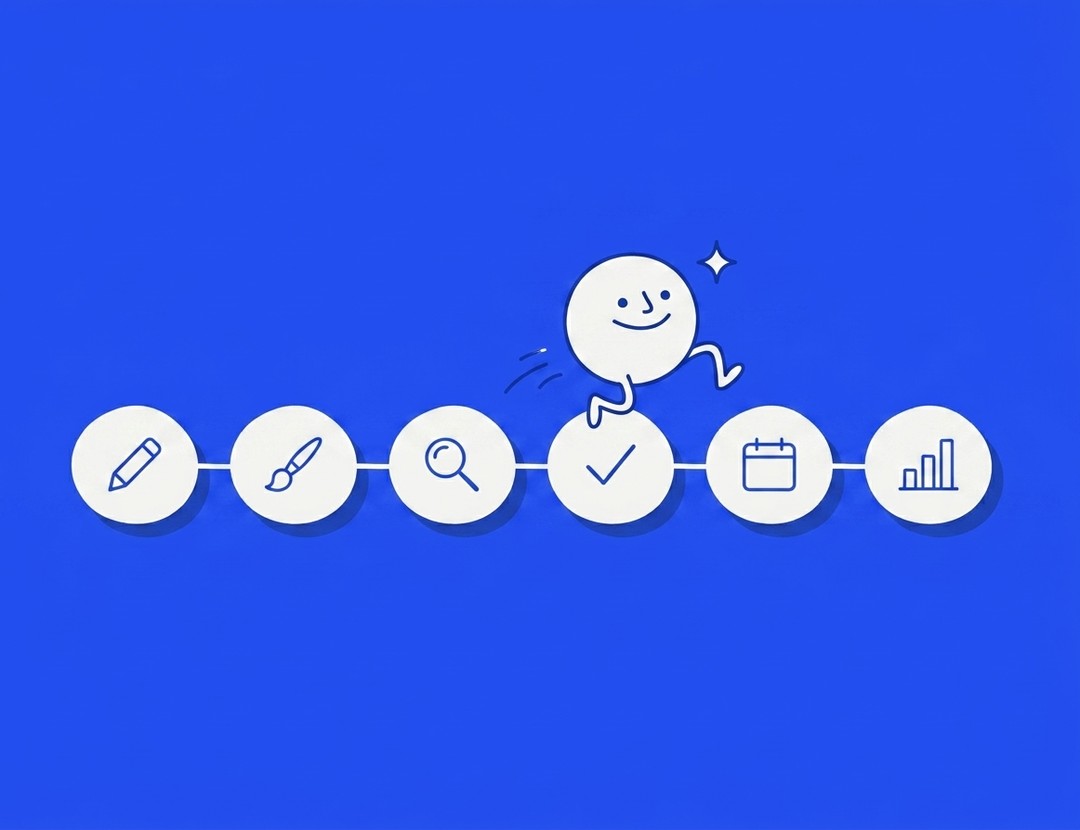
The teams handling this well didn’t write a 10-page memo. They added one question to their existing approval workflow: “Does this need an AI label – and is it visible in the asset?” Asked once per post, answered before anything goes live.
With Kontentino you can:
- Tag AI-generated posts with internal labels so nothing photorealistic slips through unflagged
- Preview the exact live post before approval – so you see the disclosure is actually visible, not buried
- Route sensitive posts through a second approver – the “not sure? escalate” rule, built into the flow
- Keep a full approval trail – so “who approved this and when” is one click, not an archaeology project
Build your approval safety net with Kontentino
This article is not legal advice – when in doubt, ask your lawyer.